Case Law Review – T 1097/06

Case:

T_1097/06

Claimed Subject Matter:

A computer-based system and method for detecting risks.

A specific object of the invention is to provide a computer-based system and method for detecting risks emerging in geographical areas without having to collect measurements of risk indicators in all of the geographical areas (A1 publication, paragraph [0004], last sentence).

Comments:

Side steps inventive step issues raised in examination by refusing application for lacking novelty over the prior art.

A Searchable CIPA Journal Archive

The CIPA Journal – the august publication of the UK’s Chartered Institute of Patent Attorneys – contains a veritable treasure trove of articles for the discerning Patent Attorney. It’s a shame then that, after an initial read, most editions find themselves in a forlorn pile in a distance corner of the average Patent Attorney’s office…

CIPA Journal

…Until now. With a few simple steps, you can breath life into those old editions and be the envy of your Attorney colleagues. Here’s how to do it:

  1. Goto the CIPA Website: http://www.cipa.org.uk .
  2. Log in as a member (“Members” link on left-hand side).
  3. Once logged in, click “Journal Archive” on the right-hand side.
  4. Download the available issues into a directory, such as “CIPA Journals”.

This gets you a nice collection of CIPA Journals in PDF format. You can use Adobe Acrobats “Find” feature:

to search in individual editions. However, to be of real use we need to be able to search the whole directory. There are two ways to do this:

Using Acrobat Portfolios

Adobe Acrobat 9 has a “Portfolio” feature. Click on “File” > “Create PDF Portfolio” to create one:

Portfolio

When the Portfolio screen loads up click “Add Existing Folder”:

Add Existing Folder

Choose your “CIPA Journals” folder. After Acrobat has worked its magic, save the Portfolio using “File” > “Save Portfolio As…”. You can now search through the Journals in the Portfolio using the “Search” box in the top right corner:

Search Portfolio

Using Windows Search

Updated / modern versions of Windows come with a “Windows Search” tool. You can find this by looking for the magnifying glass in the system toolbar. You can also display a search box by right clicking the Windows toolbar, selecting Toolbars, then selecting Windows Search Deskbar:

Windows Search

If the “CIPA Journals” folder is in your “My Documents” folder you should be able to search within the PDFs straight away by entering the search term in the Deskbar.

If that does not work you may have to check your search options. Right click the magnifying glass in the toolbar and select “Windows Search Options”. When the optiosn screen appears click modify to add your “CIPA Journals” folder to the list of indexed locations. Also click on “Advanced” and go to the “File Types” tab. Check “pdf” is an option and that the second radio box is active: “Index Properties and File Contents”. If the radio options are greyed out you will need to install the PDF iFilter, available as a free download from Acrobat (see here).

One downside to the Windows Search is I have not yet been able to show the highlighted text within each PDF. Hence, for each of your search results you will need to search within the PDF in the usual way to find the specific paragraphs. There are other 3rd party tools that can be used to search PDFs: see this post for details.

Some Interesting Euro-Moroccan Developments

I have always been a fan of the progressive nature of the European Patent Office, for example, including Turkey which is (at present) a non-EU state.

I was thus glad to see signs of a new partnership between the Moroccan Patent Office and the EPO. An agreement has been signed that appears similar to existing extension state agreements (wherein an European patent can be registered as a national patent in Balkan states that are not yet signatories to the European Patent Convention).

Whereas the extension state agreements became a stepping stone for becoming a full EPC signatory, the new Moroccan agreement appears to be a looser co-operation agreement that could pave the way for easy conversion of a European patent into a Moroccan national patent. Exact implementation details will follow amendments to Moroccan national law.

More details can be found here:

http://www.epo.org/topics/news/2010/20101220.html

http://www.eplawpatentblog.com/eplaw/2010/12/epo-european-patents-may-become-valid-in-morocco.html

“EU Patent” Rumour Mill: Saga Update

Plans have been afoot since the dawn of time (well at least the 70s) for a unitary patent right across the whole of the EU (plus special guests like Turkey). See Wikipedia for background.

EU Patent?

As many may know, the existing “European Patent” is a bit of a hydra; on grant a centrally administered application is converted into a number of national rights which need to be managed and enforced nationally. For years European politicians have been labouring away to sort out this messy back-end to make it easier for patent owners to enforce their rights Europe-wide. However, the proposition covers a minefield of incendiary issues:  language (the Italians and Spanish get particularly fired up over this); forum-shopping (the British and Germans do not like the thought of national rights being litigated in back-water jurisdictions); replacement of sovereign rights; integration with the European Patent Office; the disjoin between EU members and European Patent Convention (EPC) states (the latter being more progressive)  etc..

Things had been placed back on the burner a little after several years in the wilderness. However, the language issue recently torpedoed any forward progress.

Interesting though, this weekend a number of rumours have been circulating that several EU countries are making another stab at it, this time in the form of a private arrangement under the Lisbon Treaty. This quite cleverly side-steps the language issue by leaving the Spanish and Italians on the outside of the private arrangement. For example, PatLit reports on an article in the Financial Times  and Axel Horns picks up on a tweet from Mr Vincent Van Quickenborne (great name), Belgian Minister for enterprise and streamlining policy.

EPO Rule Changes: R.141 EPC – Update to Prior Art Exchange Procedures

Following on from my post here, the President of the EPO has decided that an applicant will not need to file search results under R.141(1) EPC if the priority application was first-filed in one of:

  • US,
  • UK, or
  • Japan.

These will be exchanged between the patent offices automatically. In most cases, US, British and Japanese attorneys (and the majority of their clients) can thus let out a sigh of relief.

As set out here, this adds to the exemptions available when the search reports were drawn up by the EPO (e.g. EPO search on international or national applications).

Still from January it is worth checking the state in which a  priority application was filed as a general procedural step.

European Patent Attorney: an old profession?

Over on Linkedin somebody asked the question: How many registered patent attorneys are actually working? This got me thinking about the situation in Europe.

As of Feb 2008 there were just under 9000 European Patent Attorneys. However, 40% of those were “grandfathered in“, i.e. were practising national attorneys in 1977/1978.

If you estimate the youngest practising attorney in 1977/78 to be 25 years old (the average is probably around 30), this means that 40% of European Patent Attorneys are over 57 years old.

How many of these are still working? How many will retire in the next 5 years or so? Interesting questions.

Quick Post: IP Enforcement in the Age of Austerity – The PCC

Without much publicity (both inside and outside of the world of IP), fundamental reforms to the procedure for IP enforcement at the Patents County Court (PCC) have come into effect.

Basically, the PCC offers a more streamlined and cost effective forum for low value/complexity claims. Designed for small to medium sized enterprises (SMEs), costs are capped at £50,000. The form of proceedings sits somewhere between proceedings before the UKIPO, the EPO and the High Court.  Damages are due to be limited to £500,000 by legislation coming into force in April 2011.

The changes are summarised by the UKIPO here.

The reforms are discussed by Field Fisher Waterhouse here. [Update: details of the first case management conference have been published; see here]

Patlit has a useful two-part guide here and here.

The Spark comments on the transfer of cases from the High Court here (also discussed by Patlit here).

Quick Post: UK Patent Costs

OK. You have, or are going to have, a granted UK patent. It lasts for 20 years from the filing (not priority) date. How much will it cost once granted?

Renewal fees are due annually by the end of the month in which the filing anniversary lies. (E.g. filed on 3 October: pay renewal in 3 months up to 31 October). They are due for years 5 to 20 (i.e. the first renewal is due 4 years from filing for the 5th year).

As of 6 April 2010, the official fees increase from £70 to £600 for years 5 to 20. Current fees can be checked here. This totals £4,550 over the 20 year term (excluding pre-grant prosecution costs).

If you wish for someone else to monitor and pay the fees (typically an annuity service linked with your patent attorney), increase this cost by about 30%, i.e. ~ £6,000.

Official fees can be cut by half if you make licences of right available (which in term limits enforcement/damages in court). If the cost is a burden ask your patent attorney about this option. Application needs to be made at least 10 days before the next anniversary date to obtain the discount on the next fee.

British Photographer v. Texan Pornographer

I read about this case last week. Although pretty straightforward from a legal point of view it made a good story: hard-working teenage amateur – check; evil Texan pornographer – check; lawyer-done-good – check; copyright issues – check; amusing email exchanges – check; and justice served – check.

I will leave the details of the story to Plagiarism Today and Eric Goldman (follow links). The photographer in question (Lara Jade Coton – who is now a bit older) writes about winning the case here.

An interesting point that arose was the separation in the US between copyright and publicity rights (see Eric Goldman’s report). Even if a photograph on the Internet appears to have a permissive (copyright) Creative Commons licence, if it features or references one or more people, and is used in advertising, you will also need to obtain permission from those people with regard to their publicity rights. This was apparently poorly considered by the court.

Another interesting aspect is the registration of copyright works in the US.  If the photograph in question had been registered in the US damages would have been a lot higher (in the end they were around $4k) and costs for attorneys fees may have been available. However, is it reasonable to expect a 14-year-old British amateur photographer to register her photos in the US? (Or even to know to do this?) What about a Flickr account with hundreds of photos? A quick glance at the US Copyright Office website shows that there is room for improvement in terms of usability and clarity; even the material for Teachers and Students is unclear as to the registration process (i.e. What exactly can be registered? What fees are required? How does registration function for works uploaded to Internet sites?)

In the present case, if there was no additional defamation action, it would likely not have been worth pursuing a copyright action. The issues with registration and enforcement raised by the case are not unique to the US; however, they again demonstrate that some form of global copyright is needed (e.g. to protect artists and their works) but that the present system(s) need revision in the Internet age.

UKIPO: Dedicated Email Addresses

There are a number of dedicated email addresses used by the UK IPO in their day-to-day activities. As I get older, my already over-loaded brain refuses to remember anything with an “@” (which either the Dutch or Germans allegedly call a “monkey’s tail”) . I will therefore set them out below.
[The @ signs below have all been replaced with [at] to prevent crawling by automated spam-bots.]
In general, all emails should be a plain text email message (RFC822-compliant). The UKIPO will not accept MS-TNEF/RTF format messages or HTML format messages. Nor will they accept messages that are encrypted or digitally signed. Make sure you change your email settings appropriately.
The UKIPO will send a return email message confirming receipt of the any sent email – do not assume your email has been received until you receive this.

Extensions

Extensions of time under Section 117B (e.g. for examination reports): pateot[at]ipo.gov.uk
Form of email required
  • Example subject line: “Extension of time under s.117B for patent application number GBYYXXXXX.X”. For requests under section 117B(4)  add the word “DISCRETIONARY” in capital letters.
  • Example body text: “We hereby request a [2 month] extension to the period [for replying to the Examination Report dated DD/MM/YY].”
  • Further extensions under s.117B(4) require reasons.

Withdrawal

For withdrawing a UK patent application: withdraw[at]ipo.gov.uk
Form of email required
  • Example subject line: “Withdrawal of patent application number GBYYXXXXX.X”.
  • The body text of the email message should contain a statement of withdrawal that is not ambiguous or conditional. Such a statement could read:”I withdraw patent application number GBYYXXXXX.X”.
  • If you wish to file a subsequent application, and use this as a basis for a priority claim, then, inter alia, the withdrawal of the application should be made without leaving any rights outstanding. This can achieved using a statement such as “I withdraw patent application number GBYYXXXXX.X without leaving any rights outstanding”. Please note that making this statement rules out the possibility of later making a request to correct the withdrawal of a withdrawn application (resuscitation) or to request reinstatement of an abandoned application (i.e. leave any withdrawals to a professional).
  • The email message should also contain some indication that the person withdrawing the application is authorised to do so, eg. “I am the applicant / the applicant’s agent for the application”.
  • The email message should contain no attachments and the request to withdraw the application should not be contained in an attachment. The request should be made in the body of the message.
  • Also see here.

Third Party Observations

For submitting third party observations under Section 21: section21[at]ipo.gov.uk

Form of email required
  • Example subject line: “Third Party Observations under s.21 for patent application number GBYYXXXXX.X”.
  • Observations can either be provided in the body text of the email or in an attachment. The attachment should preferably be in one of the following formats: MS Word, WordPerfect, PDF or plain text (.txt/.rtf).

Amendments

Filing amendments to a patent under Sections 27 or 75: litigationamend[at]ipo.gov.uk

Form of email required
  • Example subject lines: “Proposal to amend patent number GBXXXXXXX under s75 before the courts [or the comptroller]” or “Proposal to amend patent number GBXXXXXXX under s27” as appropriate.
  • The text may be provided as an attachment to the email.
  • Use of “Track Changes” is encouraged.
  • Accepted formats, inter alia, MS Word, WordPerfect, and PDF.

Observations on Patent Office Opinions

Filing observations for a UKIPO Opinion: opinions[at]ipo.gov.uk

Form of email required
  • Example subject line: “Observations relating to Opinion No. [NN/YY]”.
  • Observations can either be provided in the body text of the email or in an attachment. The attachment should preferably be in one of the following formats: MS Word, WordPerfect, PDF or plain text (.txt/.rtf).
  • An acknowledgement may not be provided immediately.
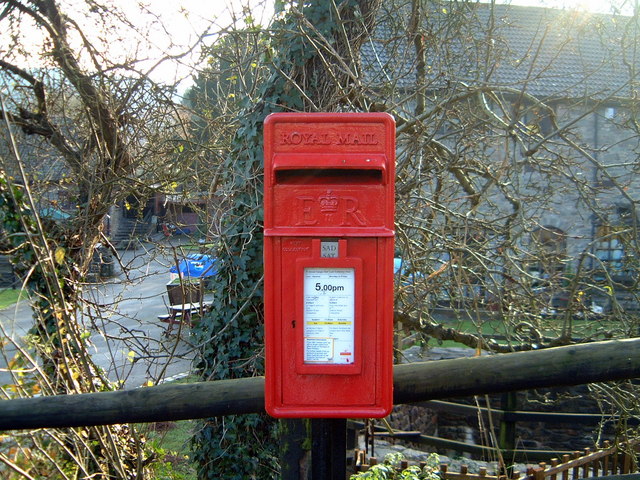
[ Image: Modern lamp letter box at Abbey Mill, Tintern (Roy Parkhouse) / CC BY-SA 2.0 ]