European Patent Attorney: an old profession?

Over on Linkedin somebody asked the question: How many registered patent attorneys are actually working? This got me thinking about the situation in Europe.

As of Feb 2008 there were just under 9000 European Patent Attorneys. However, 40% of those were “grandfathered in“, i.e. were practising national attorneys in 1977/1978.

If you estimate the youngest practising attorney in 1977/78 to be 25 years old (the average is probably around 30), this means that 40% of European Patent Attorneys are over 57 years old.

How many of these are still working? How many will retire in the next 5 years or so? Interesting questions.

Quick Post: IP Enforcement in the Age of Austerity – The PCC

Without much publicity (both inside and outside of the world of IP), fundamental reforms to the procedure for IP enforcement at the Patents County Court (PCC) have come into effect.

Basically, the PCC offers a more streamlined and cost effective forum for low value/complexity claims. Designed for small to medium sized enterprises (SMEs), costs are capped at £50,000. The form of proceedings sits somewhere between proceedings before the UKIPO, the EPO and the High Court.  Damages are due to be limited to £500,000 by legislation coming into force in April 2011.

The changes are summarised by the UKIPO here.

The reforms are discussed by Field Fisher Waterhouse here. [Update: details of the first case management conference have been published; see here]

Patlit has a useful two-part guide here and here.

The Spark comments on the transfer of cases from the High Court here (also discussed by Patlit here).

Quick Post: UK Patent Costs

OK. You have, or are going to have, a granted UK patent. It lasts for 20 years from the filing (not priority) date. How much will it cost once granted?

Renewal fees are due annually by the end of the month in which the filing anniversary lies. (E.g. filed on 3 October: pay renewal in 3 months up to 31 October). They are due for years 5 to 20 (i.e. the first renewal is due 4 years from filing for the 5th year).

As of 6 April 2010, the official fees increase from £70 to £600 for years 5 to 20. Current fees can be checked here. This totals £4,550 over the 20 year term (excluding pre-grant prosecution costs).

If you wish for someone else to monitor and pay the fees (typically an annuity service linked with your patent attorney), increase this cost by about 30%, i.e. ~ £6,000.

Official fees can be cut by half if you make licences of right available (which in term limits enforcement/damages in court). If the cost is a burden ask your patent attorney about this option. Application needs to be made at least 10 days before the next anniversary date to obtain the discount on the next fee.

UKIPO: Dedicated Email Addresses

There are a number of dedicated email addresses used by the UK IPO in their day-to-day activities. As I get older, my already over-loaded brain refuses to remember anything with an “@” (which either the Dutch or Germans allegedly call a “monkey’s tail”) . I will therefore set them out below.
[The @ signs below have all been replaced with [at] to prevent crawling by automated spam-bots.]
In general, all emails should be a plain text email message (RFC822-compliant). The UKIPO will not accept MS-TNEF/RTF format messages or HTML format messages. Nor will they accept messages that are encrypted or digitally signed. Make sure you change your email settings appropriately.
The UKIPO will send a return email message confirming receipt of the any sent email – do not assume your email has been received until you receive this.

Extensions

Extensions of time under Section 117B (e.g. for examination reports): pateot[at]ipo.gov.uk
Form of email required
  • Example subject line: “Extension of time under s.117B for patent application number GBYYXXXXX.X”. For requests under section 117B(4)  add the word “DISCRETIONARY” in capital letters.
  • Example body text: “We hereby request a [2 month] extension to the period [for replying to the Examination Report dated DD/MM/YY].”
  • Further extensions under s.117B(4) require reasons.

Withdrawal

For withdrawing a UK patent application: withdraw[at]ipo.gov.uk
Form of email required
  • Example subject line: “Withdrawal of patent application number GBYYXXXXX.X”.
  • The body text of the email message should contain a statement of withdrawal that is not ambiguous or conditional. Such a statement could read:”I withdraw patent application number GBYYXXXXX.X”.
  • If you wish to file a subsequent application, and use this as a basis for a priority claim, then, inter alia, the withdrawal of the application should be made without leaving any rights outstanding. This can achieved using a statement such as “I withdraw patent application number GBYYXXXXX.X without leaving any rights outstanding”. Please note that making this statement rules out the possibility of later making a request to correct the withdrawal of a withdrawn application (resuscitation) or to request reinstatement of an abandoned application (i.e. leave any withdrawals to a professional).
  • The email message should also contain some indication that the person withdrawing the application is authorised to do so, eg. “I am the applicant / the applicant’s agent for the application”.
  • The email message should contain no attachments and the request to withdraw the application should not be contained in an attachment. The request should be made in the body of the message.
  • Also see here.

Third Party Observations

For submitting third party observations under Section 21: section21[at]ipo.gov.uk

Form of email required
  • Example subject line: “Third Party Observations under s.21 for patent application number GBYYXXXXX.X”.
  • Observations can either be provided in the body text of the email or in an attachment. The attachment should preferably be in one of the following formats: MS Word, WordPerfect, PDF or plain text (.txt/.rtf).

Amendments

Filing amendments to a patent under Sections 27 or 75: litigationamend[at]ipo.gov.uk

Form of email required
  • Example subject lines: “Proposal to amend patent number GBXXXXXXX under s75 before the courts [or the comptroller]” or “Proposal to amend patent number GBXXXXXXX under s27” as appropriate.
  • The text may be provided as an attachment to the email.
  • Use of “Track Changes” is encouraged.
  • Accepted formats, inter alia, MS Word, WordPerfect, and PDF.

Observations on Patent Office Opinions

Filing observations for a UKIPO Opinion: opinions[at]ipo.gov.uk

Form of email required
  • Example subject line: “Observations relating to Opinion No. [NN/YY]”.
  • Observations can either be provided in the body text of the email or in an attachment. The attachment should preferably be in one of the following formats: MS Word, WordPerfect, PDF or plain text (.txt/.rtf).
  • An acknowledgement may not be provided immediately.
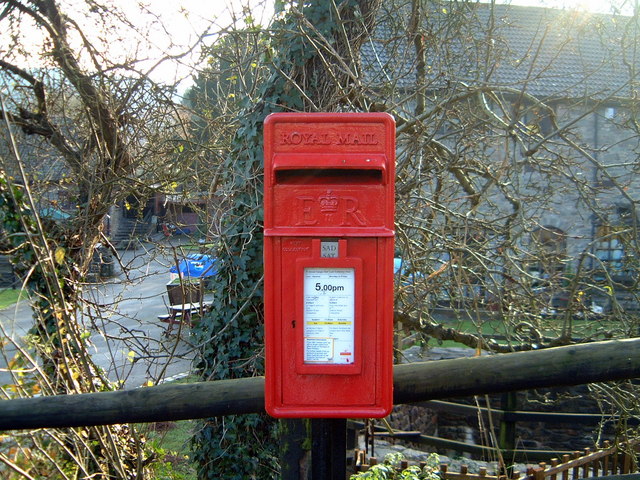
[ Image: Modern lamp letter box at Abbey Mill, Tintern (Roy Parkhouse) / CC BY-SA 2.0 ]

Filing Confidential Information at the UKIPO

If you need to file confidential information relating to a published application or patent at the UK Intellectual (i.e. Patent) Office, you must make a request for confidentiality at the time of filing the document containing the information.

Rule 53 allows a request for confidentiality to be made on filing the document or up to 14 days after this date. However, due to the electronic filing systems of the UKIPO, any confidential document not accompanied by a request for confidentially will be open to public inspection until a request is made.

This was set out in a Practice Notice issued in April 2007 (see page 42 of this document):

From 1 April [2007], any document filed in connection with a published patent application or a patent is open to inspection on filing. However, it remains possible to make a request for confidentiality at the time of filing the document. If such a request is made, the document is kept confidential while the request is considered. It also remains possible for confidentiality to be requested up to 14 days after the document has been filed. The document will have been open to inspection in the meantime, but will become confidential once a request has been made and will remain so while the request is considered. The 14 days for making a request continues to be extendable at the comptroller’s discretion.
Therefore, if you do need to keep information confidential, make sure it is clearly indicated in a covering letter.
Thanks to ivoryelephantphotography for the use of the photo.

European Attorney Japes?

Just spotted this notice issued by the EPO concerning:

…an e-mail containing a hoax announcement purporting to be from the EPO in which the public is given the impression that the Office’s fax and online filing services will not be available from 30 September 2010 to 6.00 hrs on 4 October 2010…

Whoever instigated such an email would appear to need an understanding of the transitional deadline for filing divisional applications (1 October 2010) set by the recent EPO Rule Changes.

They would also appear to need to get out more often.

Oops! We’ve missed the Priority Deadline – Abaco Revisited

The case of Abaco Machines (Australasia) Pty Ltd, Re Patent Application [2007] EWHC 347 concerned an unfortunate group of Australian patent agents who managed to make a mess of a priority filing. In a cruel twist of fate, the case was heard in the UK only a few months before reforms of the Regulations of the PCT came into force that might have alleviated their errors.

Image: Francesco Marino / FreeDigitalPhotos.net

Original Facts of the Case

A Vietnamese priority application was filed on 7 January 2004. The applicants wanted to file a PCT application before the end of the priority year. The Australian patent agents mistakenly timetabled the end of the priority year as one of 14 or 17 January 2005; both dates being after the actual deadline of 7 January 2005.  The patent agents only began to prepare the PCT application on 8 January 2005 and by 13 January 2005 they had realised they had missed the 12-month priority window.

UK Decision

At the time, UK patent law allowed a request for a late declaration of priority under s.5(2B). A late priority claim could be made if, inter alia, a UK application was filed within two months of the expired priority period (i.e. by 7 March 2005) and it could be shown that the applicant’s failure to file the application was unintentional.

The Judge agreed with the hearing office’s finding that there was no unintentional failure to file a UK application, the failure related to a PCT application and the filing of the UK application was intentional based on this failure. At the time there was no mechanism to request a late declaration of priority under the PCT.

PCT Reforms

On 1 April 2007, Rules 26bis.3 and 49ter allowing the restoration of a priority right under the PCT came into force (see page 55 of this document).

Let us see what happens when we take the Abaco facts while adding 5 years to the dates:

Revised Facts

A Vietnamese priority application was filed on 7 January 2009. The applicants want to file a PCT application before the end of the priority year. The Australian patent agents mistakenly timetable the end of the priority year as one of 14 or 17 January 2010.  The patent agents only begin to prepare the PCT application on 8 January 2010 and by 13 January 2010 they realise they have missed the 12-month priority window.

What can we do?

1. Restore the right of priority upon filing the PCT application under PCT Rule 26bis.3:

  • As set out here, Australia as a Receiving Office (RO) under the PCT accepts requests for restoration of the right of priority under Rule 26bis.3. Hence, the Australian patent agents can file a PCT application with the Australian Patent Office (APO) as RO. The application must be filed, and the request must be made, within two months of the expiration of the priority period, i.e. by 7 March 2010.  The APO applies national standards relating to missed time limits (see page 7 of the AU PCT Guide), which are equivalent to at least the “unintentional” standard. The APO charges a fee for making the request. Prima facie it is likely the request will be accepted.
  • When the application enters the national phase in the UK, the UK Intellectual Property Office (UKIPO) should accept the late declaration under 49ter.1 (presuming the UKIPO does not dispute the APO’s findings). See paragraphs 6.26 and 13.73 of the UKIPO’s Formalities Manual.

2. Restore the right of priority upon filing the UK national phase application under PCT Rule 49ter.2:

  • File a Form 3 within one month of entering the UK national phase, together with a fee (£150) and evidence of the Australian agents’ errors. Prima facie, the facts would likely support a finding that the failure to file the PCT application was unintentional. Ideally, the evidence should be in the form of an affidavit or witness statement signed by the Australian agents.
  • This can also be performed if the RO were to refuse the restoration request.

There you go. Just one of the reasons why the world we live in today is not as bad as yesteryear.

[Photo with thanks to Francesco Marino / FreeDigitalPhotos.net]

UKIPO: Duty to Disclose Search Reports

Following my post on the supply of Search Results to the EPO, I thought it would be useful to clarify the procedure for the supply of related search reports at the UKIPO. This may be of particular use to US patent attorneys or agents.

The procedure at the UKIPO is not immediately apparent and requires a little investigation. I will summarise the procedure then provide links to the relevant legal basis.

The bottom-line is that all related search reports available at the time of replying to the first examination report should be supplied to the UKIPO.

Procedure

The procedure is as follows:

  1. The UK IPO issues a search report. The search report contains a standard paragraph requesting official search reports produced by other patent offices on corresponding applications (“related search reports”).
  2. The request can be met by filing a copy of the related search report(s) or by emailing the UKIPO the details of the citations in the search report(s) (see the issued search report for an email address). It is not necessary to supply the citations themselves.
  3. The request is time-limited and is active up to the time of responding to the first examination report. This means that you need to provide related search reports that have been issued up to the time of responding to the first examination report. As a guide the first examination report is typically issued 2 to 3 years from the effective (priority or filing) date of the application (if proceedings are not accelerated).

In practice, any related search reports available at the time should be filed together with the request for substantive examination (due six months after publication). This allows them to be taken into account during substantive examination. Any search reports issued after the request for substantive examination (if it is likely examination has already started) should be filed with the reply to the first examination report.

If the first examination report is a notice of allowance (issued under s.18(4)), search reports should still be filed. The cut-off date is two-months from the issue of the s.18(4) report.

Exemptions

The following search reports need not be filed:

  • search reports that show a nil response (i.e. no cited documents – it is not clear whether an “A” citation would be considered a “nil response”);
  • search reports that have been published by WIPO or EPO (i.e. in an International or European Search Report – the UK Examiner can obtain these via the EPO’s Online File Inspection System); and
  • search reports that have been provided on a parent application (i.e. a parent UK patent application if the present application is a divisional application).

Sanction

No sanction for failing to supply search reports on related applications is discussed. However, failing to supply search reports may be held against the proprietor of a patent in subsequent infringement proceedings in the UK (e.g. may limit damages available or prevent amendment – s.63(2) and s.75).

Basis for Requirement

The procedure was set out in a UKIPO Practice Notice first published in Patents and Designs Journal No.5993 on 31 March 2004. Helpfully, this Notice is not available in the Practice Notices section of the UKIPO website but can be found on page 30 of the Appendix to the Manual of Patent Practice. Paragraphs were added to search communications from 1 July 2004.

The legal basis for the request is given as:

82.—(1) Except where the Act or these Rules otherwise provide, the comptroller may give such directions as to the management of the proceedings as he thinks fit, and in particular he may

—(a) require a document, information or evidence to be filed;

[Patent Rules 2007]

As always if anyone has any comments or spots any inaccuracies please let me know using the form below.

Just So (Patent) Stories: How the Patent Got its Claims

Fletcher Moulton LJ explained in British United Shoe Machinery Company Ltd, v A Fussell & Sons Ltd (1908) 25 RPC 631 at 650 how claims came to be incorporated into a patent specification and their purpose:

“As it is the duty of the inventor to give the fullest practical information to the public he is bound to put in, if, for instance the invention is a process, quantities and times which are the best he knows.

But it would be very cruel to hold him to the invention when carried out only with those best quantities and times, because a person could then take his invention in substance if he did not take it in quite the best way, and the value of the grant would be practically nothing. Hence inventors, in their own protection, took to introducing into their specifications language intended to distinguish between that which was there for the practical information of the public, and that which was there for delimitation of the invention.

Correct delimitation was of the greatest possible importance to the inventor, because if his Patent covered something which was old the Patent was wholly bad. At the same time there was the danger of confining himself to a mere outline which gave delimitation, but did not tell the public the best way within those limits of performing his invention. The one duty required him to state his invention in its most general form, and the other duty required him to state it in its best and therefore in a very special form.

Out of that has arisen the practice, which originally was perfectly optional, of having a separate part of the specification primarily designed for delimitation. That is what we call the Claim.”

Changes to IP Civil Procedure Rules (UK)

On 1 October 2010 the 53rd Update to the Civil Procedure Rules comes into force.

The Rules relating to Intellectual Property Claims (Part 63) are updated to introduce reforms to the Patents County Court system; in particular, a number of caps on costs are being introduced for low value claims. It is hoped this will reduce the cost and risk for small to medium sized businesses.

The blurb from the Ministry of Justice is as follows:

Part 63 Intellectual Property Claims and PD63 Intellectual Property Claims

The rules and Practice Direction are amended to provide a simpler route for lower value claims including scale costs for each stage of the process with a total cap on costs of £50,000.00 for a claim relating to liability and £25,000 for an inquiry as to damages or account of profits. Consequential amendments are made to PD30, Part 45 and the Costs Practice Direction.

More details concerning the draft amendments can be found in the implementing SI.